The most useful local recommendation answers more than “where is it?”. It tells a guest why they might enjoy it, who it suits and what they should check before going.
In this guide
Write a recommendation that helps someone decide
Use this structure: [place and map link], [why you recommend it], [who it suits], [approximate journey], [whether booking is sensible] and [anything to check first]. For example, distinguish a quick breakfast stop from a restaurant for a special evening. Avoid claiming a venue is accessible, dog-friendly or open late unless you have checked its current information.
Why local recommendations matter in a holiday let guide
Guests often arrive with the same questions. Where should we eat tonight? Is there a good supermarket nearby? What can we do if it rains? Where can we walk the dog? Which beach, pub, taxi firm or takeaway would you actually choose?
Generic travel articles rarely answer those questions properly. Your guest guide can. When local tips sit alongside check-in details, WiFi, parking, house rules and checkout information, guests have a single place to look before they message you.
Local recommendations also help your property feel more personal. A printed folder can work, but it quickly dates. A digital guest guide is easier to update, share and organise, especially when guests are already using their phones to plan meals, routes and days out.
A simple template for local recommendations
Use this structure as a starting point. You do not need to include everything on day one. Start with the recommendations guests ask about most, then build your guide over time.
1. Nearby essentials
This section is not glamorous, but it is one of the most useful. Include the places guests may need within the first few hours of arrival.
- Nearest supermarket or convenience shop
- Late-opening shop for milk, bread and forgotten basics
- Petrol station or EV charging point
- Pharmacy and local medical centre
- Cashpoint, if useful in your area
- Taxi numbers or local transport options
- Nearest beach, park or dog-walking spot
Add short notes rather than just a list. For example, “Best for a quick top-up shop”, “Usually easier to park here”, or “Good for guests arriving late on a Friday”. These small details are often more helpful than a generic map result.
2. Places to eat and drink
Guests value honest, practical food recommendations. Split this section by situation rather than creating one long list.
- Best for arrival night: easy food, reliable service, takeaway or delivery.
- Best pub lunch: ideal after a walk or day out.
- Best for families: child-friendly menus, space for pushchairs or a relaxed atmosphere.
- Best for a special meal: useful for birthdays, anniversaries and weekend breaks.
- Best coffee or breakfast: particularly useful for short stays.
- Best dog-friendly option: important for pet-friendly cottages and holiday lets.
Where possible, include booking advice. If a restaurant is popular in school holidays, say so. If a pub kitchen closes early on Sundays, mention it. This is the kind of local context that makes a holiday let welcome book feel genuinely useful.
3. Family-friendly ideas
Families often need quick decisions, especially when travelling with young children. Make this section easy to scan.
- Playgrounds and parks
- Indoor soft play or leisure centres
- Family walks with toilets nearby
- Beaches with easier access
- Simple picnic spots
- Nearby farms, museums or attractions
- Rainy-day activities within a realistic drive
Add details that parents will care about, such as parking, toilets, pushchair access, muddy paths, steep steps or whether booking ahead is sensible. If your property suits families, this section can be one of the most important parts of your guide.
4. Bad-weather options
In the UK, bad-weather ideas are essential. Guests do not expect constant sunshine, but they do appreciate having a plan.
Create a section called “If it rains” or “Bad-weather ideas” and include indoor attractions, cinemas, cafés, leisure centres, local shops, museums, galleries, craft activities and scenic drives. For cottages in rural areas, it can also help to include cosy pub suggestions or nearby towns worth visiting on a wet day.
This section is particularly useful because guests often ask about it when plans change at short notice. If they can find your suggestions quickly, they are less likely to message you for ideas.
5. Walks, beaches and outdoor favourites
For many UK holiday lets, the surrounding area is part of the reason guests booked. Help them enjoy it safely and comfortably.
- Short walks from the door
- Longer routes for confident walkers
- Dog-friendly beaches and seasonal restrictions
- Picnic viewpoints
- Accessible routes where available
- Cycle routes or hire options
- Local nature reserves
Be clear about practical details. Mention if a walk is steep, muddy, poorly lit or unsuitable for pushchairs. You do not need to write a full walking guide, but you should help guests choose the right option for their group.
6. Local experiences worth booking ahead
If your area has activities that book up, include them in a dedicated section. Examples might include boat trips, guided walks, spa days, fishing permits, cookery classes, vineyard tours, children’s attractions or seasonal events.
Use wording such as “Worth booking before you arrive” or “Popular in school holidays”. This helps guests plan and shows that you understand the realities of staying in the area.
How to write recommendations guests will actually use
A useful recommendation is not just a name and address. The best entries answer the question behind the question: “Is this right for us?”
Use a consistent format
For each recommendation, include:
- Name of the place
- Short reason you recommend it
- Best for, such as families, couples, dogs, quick meals or rainy days
- Approximate travel context, such as “a short drive” or “walkable from the cottage”
- Parking or booking notes if relevant
- Map link or website link
Keep the wording short. Guests are usually checking recommendations while unpacking, planning dinner or standing in the hallway with coats on.
Add your personal host note
Your opinion is valuable. A sentence such as “We usually go here for Sunday lunch” or “This is our favourite beach when it is windy” makes your guide feel more human. It also helps guests feel that they are receiving insider advice, not copied tourist information.
Avoid overloading guests
Too many recommendations can be as unhelpful as too few. If you list every café, restaurant and attraction in the county, guests still have to do the work. Curate your guide. Choose the places you would confidently suggest to a friend staying in your property.
How local tips work inside a digital guest guide
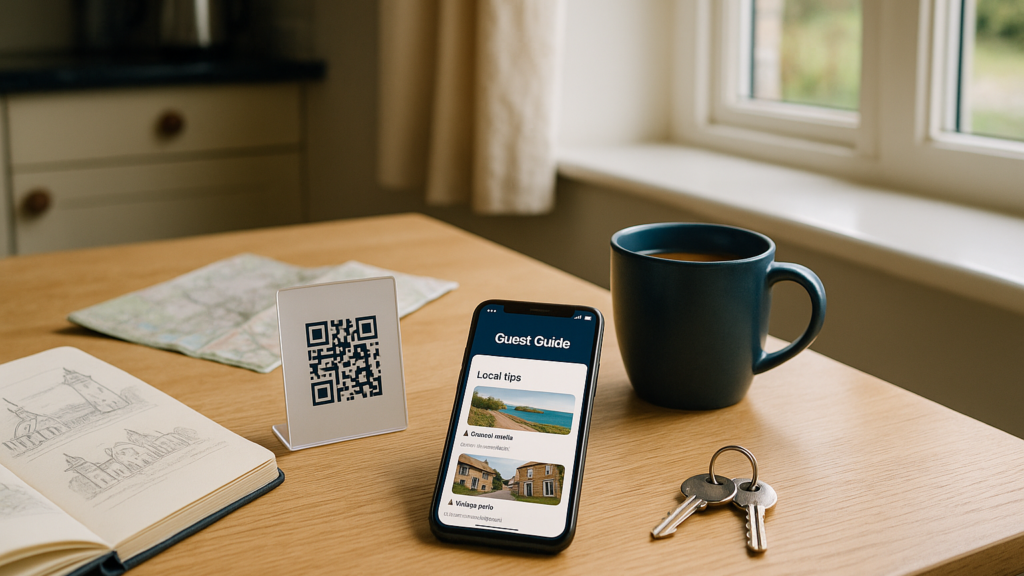
Local recommendations are more useful when they are easy to open on a phone. A mobile-first digital guest guide lets guests access information by QR code or link, with no app download and no guest login. That matters because local tips are often needed when guests are out and about, not sitting beside a printed folder.
With Welcomly, hosts can create and preview a guide for free before publishing. You can build sections for places to eat, nearby essentials, bad-weather ideas and local favourites, then update them when something changes. Guests can access the guide from their booking message, a printed QR display in the property or a link you share before arrival.
If you host on Airbnb, this can sit neatly alongside your booking communication. Welcomly’s digital guidebook for Airbnb hosts is built for independent hosts and property managers who want a cleaner way to share check-in details, WiFi, parking, house rules and local tips without asking guests to download anything.
Where to place local recommendations in your guide
Think about guest timing. Put urgent arrival information first, then organise local recommendations in a way that matches how guests make decisions.
- Before arrival: supermarkets, restaurants worth booking, travel and parking notes.
- Arrival evening: takeaways, easy pubs, late-opening shops and quick walks.
- During the stay: days out, family activities, bad-weather ideas and outdoor routes.
- Before departure: breakfast spots, local shops for gifts and book-again prompts.
If you use QR codes in the property, place them where guests naturally need help. A kitchen display could point to appliance instructions, WiFi and local food tips. A hallway display could work well for parking, taxis, walking routes and checkout reminders. You can find more practical ideas in Welcomly’s guide to the best places to display your QR code.
Template section you can copy into your welcome guide
Use this as a simple starting point and adapt it to your property.
Our local favourites
For your first evening: [Restaurant or takeaway name] is a good option if you want something easy after travelling. It is best for [quick meals/families/couples] and we recommend [booking ahead/checking opening times].
For breakfast or coffee: [Café name] is our favourite for [coffee/brunch/pastries]. It is useful if you are heading towards [local attraction/beach/town].
For families: [Place name] is a good choice for children because [reason]. Parking is [easy/limited/paid], and it is worth checking [seasonal opening times/booking details].
For wet weather: If the weather turns, try [indoor attraction/town/café/museum]. It is best for [families/couples/short visits] and works well as a backup plan.
For a walk: [Walk or location] is a good option for [short stroll/dog walk/viewpoint]. Take suitable footwear if it has been raining.
Before you leave: If you have enjoyed the area, [local shop/café/viewpoint] is a nice final stop before heading home. You can also save this guide for your next visit.
Using local recommendations to encourage repeat stays
Local recommendations should not feel like a hard sell, but they can gently support repeat bookings. If guests discover places they did not have time to visit, remind them that there is more to come back for.
Add a short section near checkout such as “Next time you visit” with seasonal ideas, upcoming events, quieter months or local experiences that suit returning guests. This works especially well for cottages, coastal holiday lets, countryside stays and serviced accommodation used by repeat business travellers.
You can also include a book-again link or direct contact button where appropriate. Welcomly includes guest contact options and guide features designed to make this kind of information easy to find. Explore the Airbnb digital guidebook features if you want to see how QR access, PIN-protected guest information and mobile-first sections can support smoother guest stays.
Common mistakes to avoid
- Listing too many places: guests want your best suggestions, not a directory.
- Forgetting practical notes: parking, booking and dog policies often matter as much as the recommendation itself.
- Letting details go out of date: review opening times and links regularly.
- Using vague wording: “Nice pub nearby” is less useful than “Good for Sunday lunch, book ahead in school holidays”.
- Hiding tips in long paragraphs: use short sections, headings and bullet points.
- Only thinking about tourists: serviced accommodation guests may need gyms, supermarkets, laundry options and reliable evening meals.
Make your local knowledge easier to use
Your local knowledge is part of your guest experience. When it is presented clearly, it can reduce repeat guest questions, help guests make better decisions and make your property feel more welcoming.
Welcomly helps hosts turn that knowledge into a mobile-first digital guest guide with no app download and no guest login. You can include check-in details, WiFi, parking, house rules and local tips in one place, then share the guide by QR code or link. You can create and preview for free, and pay only when you publish for guests.
If you are ready to improve your guest welcome information, start with digital guidebooks for Airbnb and holiday lets or view the digital guidebook demo to see how your local recommendations could look in practice.
FAQ
What local recommendations should I include for holiday let guests?
Start with nearby essentials, places to eat, family-friendly ideas, bad-weather options, walks, beaches, transport and activities worth booking ahead. Focus on the questions guests ask most often.
How many local tips should a holiday let welcome book include?
There is no fixed number. A short, curated list is usually better than a long directory. Aim for the recommendations you would confidently give to a friend staying in your property.
Should I include links to restaurants and attractions?
Yes. Website links, map links and booking links make your recommendations easier to use, especially on mobile. Remember to check them regularly so guests are not sent to outdated pages.
Can local recommendations reduce guest messages?
They can help. When guests can quickly find food suggestions, parking notes, rainy-day ideas and nearby essentials, they are less likely to message you with the same questions during their stay.
Is a digital guest guide better than a printed folder for local tips?
A printed folder can still be useful in the property, but a digital guest guide is easier to update and share before arrival. It also means guests can access your recommendations when they are out exploring, using a QR code or link with no app download.
Writing recommendations for a rural cottage or a glamping site? See how other owners structure them in our guides to digital welcome books for holiday cottages and guest guides for glamping sites.
Put this into practice in minutes.
Free to build. 30 days free when you publish. £4.99 a month after that.