
Booking platforms are brilliant at finding you new guests. They are less brilliant at letting you keep the guests you have already won. Every time a returning guest books through a platform, you pay commission on a relationship you built yourself. This guide covers practical, rule-abiding ways to grow your direct bookings, starting with the guests most likely to come back.
In this guide
Why direct bookings matter more in 2026
In June 2026 Airbnb moved UK hosts onto a single host-only service fee of around 15.5%, deducted from your payout. Booking.com commission is typically around 15%, and more if you join its promotional programmes. On a £1,000 stay, that is roughly £150 that does not reach you.
None of that makes platforms a bad deal for first-time guests: they bring visibility you would struggle to buy. The opportunity is in the second, third and fourth stays. A guest who already loves your place does not need a platform to discover it.
A quick sum worth doing: take the nights booked last year by returning guests, multiply by your average nightly rate, then by your platform fee. That is the money a direct rebooking could have kept. Our direct bookings calculator does the maths for you.
Know the rules before you start
This is the part many direct-booking guides skip. Platforms set rules about contacting guests and taking bookings elsewhere, and breaking them can cost you your listing.
- Airbnb does not allow hosts to ask or encourage guests to move current, future or repeat bookings off Airbnb, to include links in listings or messages that take people off the platform, or to take payment outside Airbnb. Repeated breaches can lead to suspension.
- Other platforms and agencies have their own terms. Some cottage agencies also have clauses about rebooking guests directly. Read your agreement.
The practical rule: never use a platform’s messages or listing to steer guests away. Direct bookings should come from guests who find you on their own, from channels you own, and from guests who booked direct in the first place.
Build something guests can find directly
Guests can only book direct if there is somewhere to book. You do not need an expensive website to start.
- A simple booking page with photos, a calendar or enquiry form and your terms. Many channel managers include one.
- A memorable property name that is easy to search. If a past guest types “Seabreeze Cottage Dartmouth” into Google, they should find you, not just a listing.
- Listings you control, such as your local tourism board, walking or dog-friendly holiday directories, so guests can find a route to you that is not a booking platform.
- Consistent photos and branding across your website, social profiles and guest guide, so guests recognise you.
Win the second booking during the first stay
The best time to earn a repeat booking is while guests are still on holiday and loving it. That comes down to the stay itself:
- A smooth arrival. Clear directions, parking and access instructions sent before they set off. Arrival stress colours the whole stay.
- Answers without asking. Wi-Fi, heating, hot water and appliances explained clearly, ideally with photos.
- Personal local knowledge. The pub with the best Sunday lunch, the walk you always do, the beach that is quieter after four. This is what makes a place feel like yours, and what guests remember.
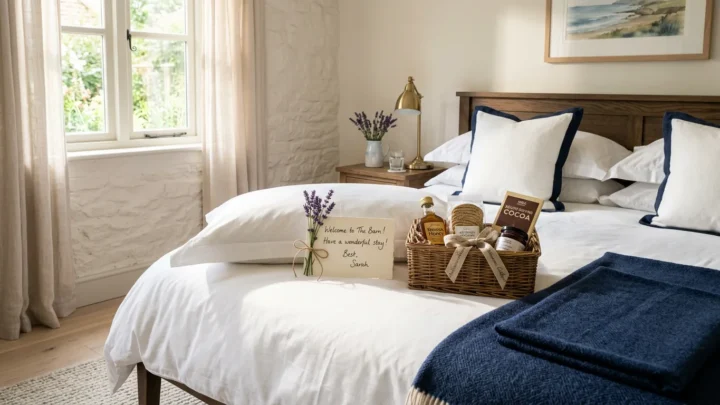
- Small surprises. A welcome note, local treats or a fresh pint of milk cost little and are mentioned in reviews again and again.
Make rebooking effortless
When a guest decides they want to come back, the route back to you should be one tap, not a search.
- Your guest guide can include a Book again direct button linking to your booking page, phone, WhatsApp or email. In Welcomly you can switch it on or off for each guide, so you can keep it off for guides shared with Airbnb guests and on for guests who booked direct.
- A printed card in the property with your website address works for every guest, including those who prefer paper.
- Your own past-guest list. For guests who booked direct and agreed to hear from you, a short annual email with next year’s dates is often your best-performing marketing. Follow UK GDPR and only email people who have opted in.
Price and policies for direct guests
Give returning guests a reason to book with you rather than through a platform, without breaking any rate-parity terms you have agreed to. Options that tend to work well include first pick of peak dates, flexible check-in or check-out where your changeover allows, or a returning-guest welcome gift. Keep your terms, deposit and cancellation policy clear and written down, and take payment through a secure provider.
Measure what works
Track where each booking came from and whether the guest has stayed before. After a season you will know how many repeat guests you have, which channels bring them, and what each direct booking saved you. That tells you where to spend your time next year.
The short version: deliver a stay worth repeating, make yourself easy to find, and put a simple, rule-abiding route back to you in every guest’s pocket. A digital guest guide does two of those three jobs at once. See how a live Welcomly guide works.
Put this into practice in minutes.
Free to build. 30 days free when you publish. £4.99 a month after that.