
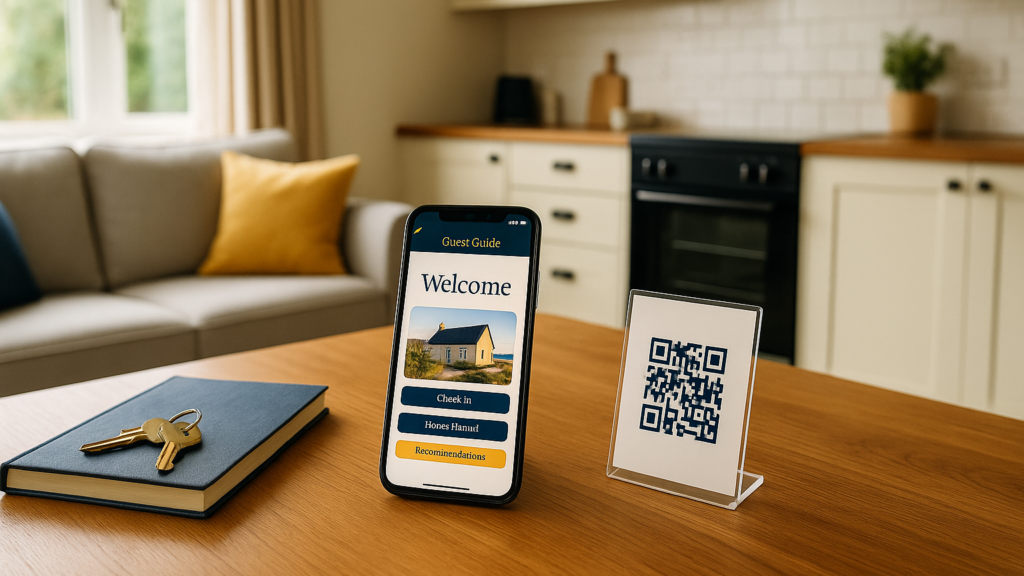
It is easy to get distracted by the next hosting tool or industry headline. For an independent holiday-home owner, a useful starting point is much closer to home: the questions guests asked during the last few stays.
In this guide
This is a practical review of your guest experience, rather than a forecast about occupancy, rates or the wider market. The aim is to find changes you can make and check for yourself.
1. Review the last five arrivals
Look back at the questions guests asked. Were they unsure where to park, which door to use or when they could check in? Group the questions by topic. If the same uncertainty appears more than once, improve that instruction first.
Sometimes the answer already exists but is hard to find. Move it earlier in the message or give it a clear card title in your guide before writing more text.
2. Separate changing details from permanent instructions
The property address may stay the same for years. An access code, contact number or restaurant recommendation may change. Keep those details in places you can update without rewriting the whole welcome book.
Give one person responsibility for checking the guide when anything changes at the property. Include it in your existing maintenance or changeover process.
3. Make the welcome feel local
A long directory rarely feels personal. Choose a few places you know and explain the fit: an easy breakfast, a rainy-day activity, a walk suitable for the kind of guest your home attracts. Link to current venue information instead of promising hours or prices you cannot maintain.
4. Test the mobile experience
Open your guide on your phone. Find the parking, Wi-Fi and checkout time without scrolling through everything. Try the contact buttons. This small test can reveal awkward labels and buried information that looked fine on a laptop.
5. Measure useful outcomes
- Which questions still arrive after guests receive the guide?
- Do guests know where to find the guide?
- Which instructions need explaining in person?
- What feedback do guests give about arrival?
Use these observations to improve the guide. A digital tool can make information easier to maintain, but it will not fix inaccurate instructions or a hard-to-find link on its own.
Your next step
A practical improvement plan for the next month
The useful question is which part of your own guest journey needs attention. You do not need a forecast of the whole holiday-let market to find that out. Use recent enquiries, the condition of your information folder and a fresh walk through the property as evidence. Prioritise problems that prevent a smooth arrival or produce the same interruption repeatedly.
Week one: check the information guests rely on
List every place you store instructions: booking messages, printed cards, a welcome folder, emails and your online guide. Compare the address, check-in time, parking arrangement, Wi-Fi details and checkout steps across them. Correct contradictions first. If an access detail changes, identify every place that needs an update rather than assuming one edit updates all channels.
Ask a person unfamiliar with the property to follow the arrival instructions. Their pauses are useful evidence. A map pin may be correct while the final gate is unclear; an appliance label may make sense only to someone who already knows the equipment. Photograph the difficult part and explain it in a few direct steps.
Week two: make the guide easy to find
Introduce the guest link in your normal arrival communication and explain what it contains. Put a QR display where guests naturally pause on arrival, with a label mentioning Wi-Fi, house information and local tips. Test it in the lighting where it will stand. Keep essential arrival and contact information available another way for guests without a connection.
Week three: improve the details that make a stay personal
Review your local recommendations. Keep a small set of places that you can explain from useful local knowledge, then check their current websites for opening information, booking requirements and suitability. Include practical essentials as well as attractions: groceries, transport and an option for poor weather. Remove stale claims instead of leaving guests to discover the change.
Make each recommendation help a guest choose. Explain whether it suits a quick meal, a family outing, a quiet walk or a planned evening. Avoid promising that a route or venue is accessible unless you have checked the relevant details. Link to the venue or route information so guests can assess changing conditions for themselves.
Week four: measure what changed
Keep a count of routine guest questions by topic and compare it with the number of completed stays. Look at similar periods, and note changes in guest mix or property arrangements. A lower raw number of messages during a quiet week does not necessarily mean the guide improved. Equally, a useful question about a genuine fault should still reach you promptly.
Use that review to choose the next small improvement. Do not add software simply because it is described as a trend. Check whether it solves a problem you have, how much work it creates and how guests will use it. A guest guide is one part of a well-run stay, alongside a maintained property and responsive hosting.
Keep booking channels consistent
If guests arrive through Airbnb, another listing site, a cottage agency or your own website, compare what they are told before arrival. The property instructions should agree, while booking-specific arrangements remain in the right conversation. Follow each channel’s communication rules and avoid presenting a shareable guide as an integration that automatically sends messages or manages reservations.
What to review each season
- Entrance, parking and access instructions, including photographs taken after any physical change.
- Heating, hot water and appliance guidance for the conditions guests will experience.
- Wi-Fi, host contact options and selected private-card protection.
- Local recommendations, opening information and transport links.
- Checkout instructions and the details on any printed essentials card.
- The live guide link and every QR display still in use.
These are practical operating priorities, not a claim that a particular trend will increase occupancy or revenue. Start with the issues your own guests encounter, make the information easier to use and review what happens over subsequent stays.
Where to go next: once arrivals run smoothly, the next priority for many independent owners is making it easy for happy guests to come back. See our guide to winning more direct bookings from past guests. And if Wi-Fi questions top your list, our free Wi-Fi QR code generator makes a printable scan-to-connect card in seconds.
Put this into practice in minutes.
Free to build. 30 days free when you publish. £4.99 a month after that.